Container Specifications
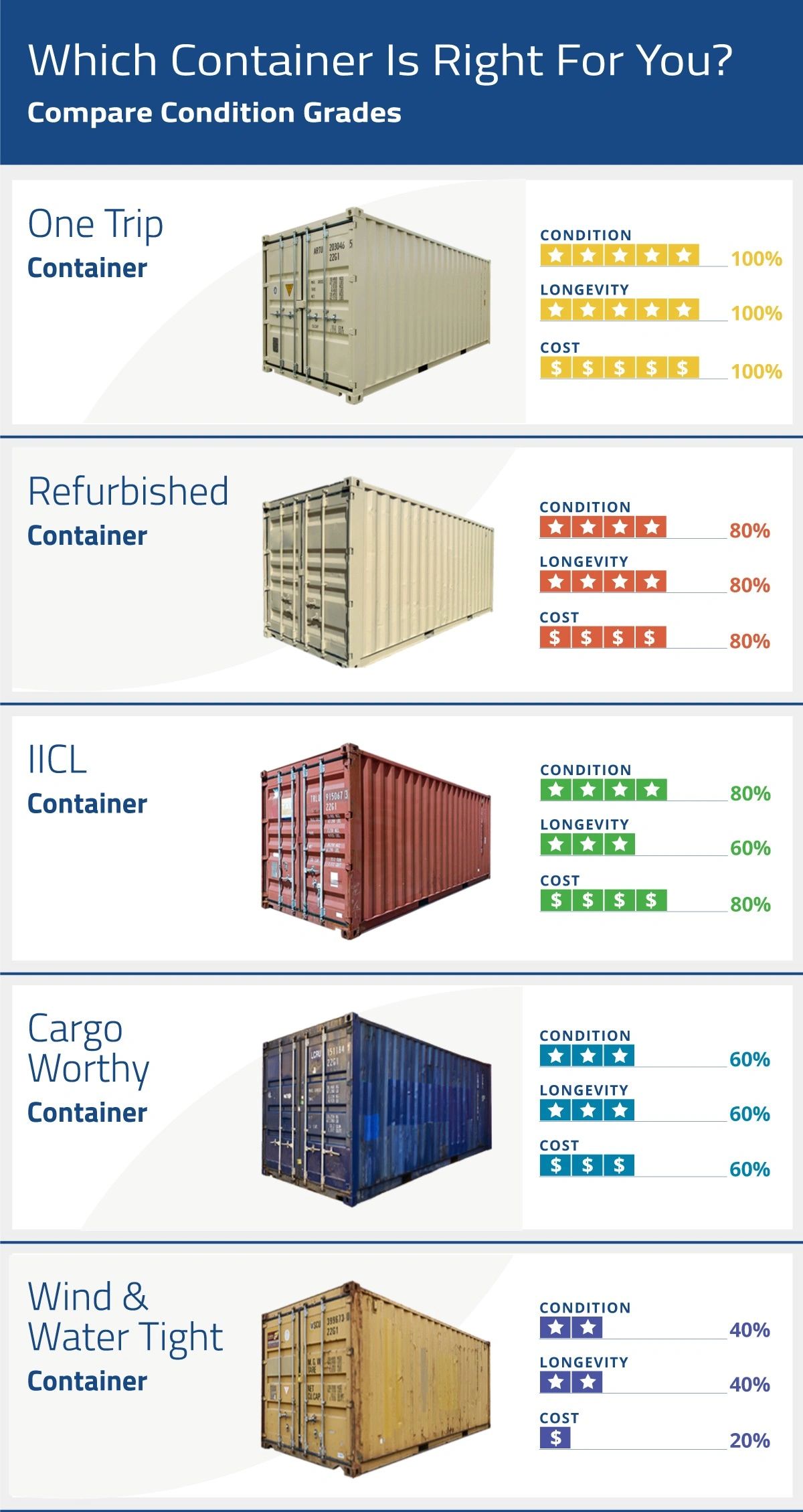
Use these reference graphics to compare container value grades, dimensions, capacity and common specifications.


Know your options
Compare construction, dimensions, capacity and condition grades so you can choose the right container with confidence.
Use these reference graphics to compare container value grades, dimensions, capacity and common specifications.
Shipping-container flooring is constructed from two main components: steel cross-members and marine-grade plywood. The steel cross-members span the width of the container, spaced approximately 4–6 inches apart and about 5 inches high. This sturdy framework enables a 20 FT container, which weighs about 5,000 pounds, to support up to 62,000 pounds.
The marine-grade plywood is ¾ inch thick and treated for waterproofing and insect resistance. It is screwed into the cross-members and has an additional moisture-barrier coating on the bottom. This combination creates a strong, watertight floor. If flooring wears out, sections can be replaced by unscrewing them and installing new panels.
New one-trip containers are less than a year old and have made only one trip from overseas to the United States. They offer the highest level of quality, durability and appearance, featuring a solid color, minimal wear, extra venting, high locking handles and a factory lock box. They are ideal for modifications and may make it easier to obtain a certificate of origin for construction permits.
One-trip containers are more expensive than used containers, so the decision comes down to whether their newer appearance and features are worth the added cost for your project.
Used storage containers are ideal for customers prioritizing function and cost over appearance. Properly maintained, they can last for years. Typically 10–20 years old, they come from leasing companies and international steamship lines. They show signs of use such as varying colors, logos, superficial dents, scratches and surface rust. Refurbishing and painting can extend their life and improve their appearance.
Used containers work well for file and record storage, boat and recreational-vehicle storage, furniture storage and construction storage. They come in different quality grades, which affects pricing, but are generally more affordable than new one-trip containers.
These containers are in good functional condition and protect contents from wind and water. They are suitable for storage and other non-transport uses but may not meet every requirement for international shipping.
These containers meet standards required for international shipping. They are inspected and certified to safely transport cargo over long distances.
Also known as new or single-use containers, these units have made only one trip from the manufacturer to their destination. They are usually less than a year old, in near-new condition and well suited for modifications or uses requiring the highest quality and durability.